

Chapel Street Editions is an independent Canadian publisher located in Woodstock, N.B. It was established in 2014 by Keith and Ellen Helmuth, along with their son Brendan Helmuth. Publishing four or five titles per year, CSE "is dedicated to a literature of place that advances an appreciation for not only our home region but for all New Brunswick's natural regions and the cultural life of their human settlements."
One of the many things I love about the book trade is the unexpected paths that open before us unexpectedly. It's why we read, of course, but it's also woven into the fabric of our lives as book people. Keith Helmuth, for example, wrote to me about a column a couple of years ago, and that has led to occasional e-mail conversations since. Book folks find book folks.
|
|||
|
|||

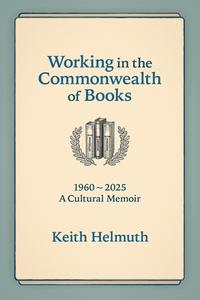
Last August. Keith published his book Working in the Commonwealth of Books: 1960-2025; A Cultural Memoir, which draws on his experiences as a bookseller, bookstore manager, college librarian, editor, and eventually publisher. It is also a compendium of books that have been significant both culturally, and personally for him over these years.
There is much to write about Keith, far more than my little column can do justice to. If you're interested, I'd recommend his book. I was particularly drawn to tales from his bookselling life over the past six decades, beginning in the early 1960s at the Paper Place in Iowa City, Iowa ("a little bookshop with a long legacy"), where he was a bookseller and eventually manager. During that turbulent decade, he would also work at the Syracuse Book Center in Syracuse, N.Y. ("Few people open shoe stores because they really love shoes, but book people open bookstores because they really love books, or more precisely, the world of books"); and the Paperback Forum in New York City ("In addition, I used my Manhattan time to conduct forays into the book culture of the city").
After a long gap in which the Helmuth family's life and work took them down other paths (though books were always in the frame), he returned to bookselling in the late 1990s at the Penn Book Center in Philadelphia, Pa. ("A good bookstore is inhabited. Minds and souls of the past and present commingle on the shelves and in the aisles.")
In 2006, Keith and Ellen Helmuth moved to Woodstock, N.B. ("Ah, I thought, retirement at last. I should have known better. The commonwealth of books had one more call."). And when Brendan relocated there in 2014, Chapel Street Editions launched.
That is just the briefest outline of Keith's life story--the bookselling version if you will. After reading the book, I asked him for some observations on the contemporary book trade. His reply, as I expected it would be, was detailed, sharply observed, and fascinating. Here, alas, I can share just a sampling from his recent reflections on bookselling:
"Having spent my bookstore career curating and managing independent, community-based bookstores on university campuses, I am obviously biased as to the relative importance of various kinds of books. As a lifelong student of ecology and as an environmental activist, I have an ingrained aversion to the waste of resources and an adherence to the values of conservation. This is bound to be reflected in my valuation of what is going on in the writing and publishing of books....
"In the world of bookstores and bookselling, I see the many closings and openings reported in Shelf Awareness. My impression is there are more openings than closings, but that may be because closings don't get as much attention as the celebration of new stores.
"In my part of the world, I see two strategies playing into the success of bookstores: 1) Bookshops that combine a significant coffee and pastry business with space and arrangements for comfortable seating; 2) bookshops that start out dealing in used books and then bring into stock a selection of carefully curated new books according to the interests of their customers. These shops often welcome and feature the books of local authors--frequently self-published--and will bring them in on consignment.
"Another strategy that augers well for success is for the bookshop proprietor to own the building in which the shop is located. Rents in commercial districts are often more than the bookshop trade can support, even for stores that generate a reasonable level of sales. Ownership of the building gives breathing room to a new bookstore business to get started, which is often needed. Facilities like this may be off the beaten track, commercially speaking, but bookstore people once they find you will return and spread the word.
"There is nothing new in these strategies for bookstore success, but I have seen how they are now being extended into small towns in rural areas where bookstores have not previously been located.
"Enterprising people who want to remain in their home areas, or newcomers who have chosen to relocate to small towns, are adapting these strategies. These are usually people who love books and have a feeling for community life, which is a little different than what motivates the typical commercial venture. It's the difference that makes a difference and it often enables success in the bookstore business."
As a publisher of works that "spring from a sense of place, portray cultural heritage, and speak to the relationship of land and people," Keith observes: "It's good to feel that our small effort in publishing books that increase an appreciation for where we live may be having a slight, positive effect on this spirit of action needed to protect what we love."